
Direct Push Services Throughout Illinois
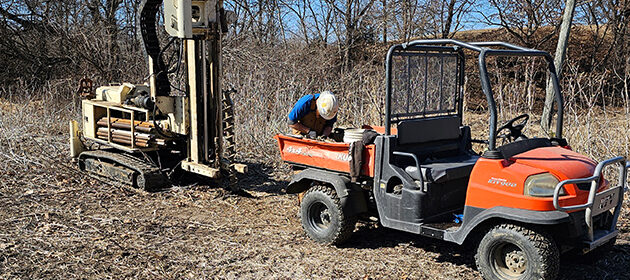
Environmental investigations often require targeted access below the surface without relying on conventional drilling for every location or objective. Under appropriate site conditions, direct-push technology can provide an efficient way to advance tooling into the subsurface and support the collection of information needed by environmental and engineering teams.
Reynolds Well Drilling provides direct-push services throughout Illinois, working with environmental consultants, engineering firms, geotechnical professionals, environmental scientists and project managers on specialized subsurface investigations.
Reynolds approaches these assignments as a drilling partner. The professional team establishes the investigation objectives and project requirements, while Reynolds provides the field capabilities needed to execute the agreed scope.
What Is Direct-Push Technology?
Direct push is a method of advancing specialized tooling into the ground using static weight and percussion rather than removing material through conventional rotary drilling.
For project managers unfamiliar with the distinction, the difference is largely in how subsurface access is created.
Conventional drilling methods typically use a rotating drilling system to advance a borehole and remove material. Direct-push equipment instead drives tooling downward through the subsurface.
Under suitable conditions and with the appropriate equipment, that tooling can potentially support sampling or the installation of certain monitoring points.
The method selected for an investigation should depend on the project’s objectives, required information and subsurface conditions. Direct push is not appropriate for every formation, depth or investigation, so Reynolds should review project requirements before a team plans its field program around the technology.
Potential Direct-Push Applications
Direct-push technology is commonly associated with environmental and subsurface investigation work because it can provide targeted access to soil and groundwater conditions.
Depending on Reynolds Well Drilling’s confirmed equipment and sampling capabilities, potential applications may include:
- Soil sampling
- Groundwater sampling
- Soil-gas investigations
- Environmental site characterization
- Contamination investigations
- Subsurface exploration
- Installation of certain monitoring points
- Other investigation support defined by the project team
Specific sample types, tooling, monitoring-point installations, depths and investigation methods must be confirmed with Reynolds for the individual project.
The objective is not to apply direct push to every investigation. It is to determine whether the technology aligns with the information the professional team needs and the conditions encountered at the site.
Supporting Environmental Site Investigations
Environmental consultants often need information from specific locations or subsurface intervals to characterize a site.
Direct push may provide a practical field method for accessing those locations when conditions are suitable.
For example, a professional project team may be investigating environmental conditions associated with a property transaction, redevelopment project or known area of concern. The consultant determines what information is required and how that information will be used within the investigation.
Reynolds Well Drilling’s role is different.
Reynolds provides direct-push field capabilities and drilling support based on the established project scope. Environmental interpretation, laboratory analysis, engineering conclusions and regulatory recommendations remain the responsibility of the appropriate professional parties unless Reynolds specifically confirms otherwise.
Maintaining that distinction allows Reynolds to focus on what it brings to the project: subsurface access and dependable field execution.
Potential Advantages of Direct Push
When site conditions and project objectives align with the technology, direct push can offer practical field advantages over conventional drilling methods.
Potential benefits may include:
- Efficient advancement – Direct-push tooling may allow certain investigation points to be advanced efficiently when subsurface conditions are suitable.
- Smaller work footprint – Depending on the equipment being used, direct-push operations may require less working area than some conventional drilling setups.
- Reduced drill cuttings – Because direct push advances tooling without conventional rotary drilling, certain applications may generate less displaced material or fewer cuttings.
- Access considerations – Appropriate direct-push equipment may offer advantages on projects where available working space or site access affects equipment selection.
These benefits should be considered project-specific rather than guaranteed. Ground conditions, required depths, sampling objectives, access and other field requirements can determine whether direct push is actually the most appropriate approach.
Direct Push Is Not the Right Method for Every Formation
Subsurface conditions can vary considerably throughout Illinois.
Direct-push equipment relies on its ability to advance tooling through the materials encountered below the surface. Certain formations or site conditions can therefore affect whether the method is practical for a particular investigation.
This is one reason project teams should provide Reynolds with as much relevant site information as possible before fieldwork is scheduled.
Information about known geology, anticipated investigation depths, sampling requirements and previous site work can help frame the initial conversation.
When direct push does not align with the project’s requirements, Reynolds’ Test Drilling capabilities may provide another option to discuss.
Equipment, Mobility and Site Access
Selecting equipment for specialized drilling work requires more than knowing the desired investigation depth.
The team also needs to consider whether equipment can reach the proposed sampling locations and operate appropriately within the available site.
Relevant access considerations may include:
- Terrain and ground conditions
- Available working area
- Access routes to investigation points
- Existing structures or site features
- Proposed sampling locations
- Project-specific site restrictions
- Other conditions identified by the engineering or environmental team
Reynolds Well Drilling’s current direct-push equipment, dimensions, mobility, tooling and access capabilities should be confirmed before publication or before a project is designed around a specific machine.
Providing site-access information early allows Reynolds to discuss whether available equipment is appropriate for the proposed work.
A Direct-Push Partner for Engineering and Environmental Firms
Direct-push projects are typically one part of a larger professional investigation.
Reynolds Well Drilling works with project teams that already have specific objectives, sampling requirements and site procedures that need to be followed in the field.
Coordination may involve reviewing:
- Project location
- Investigation or sampling scope
- Proposed sampling points
- Requested sampling method
- Anticipated depths
- Site-access conditions
- Scheduling requirements
- Applicable safety procedures
- Project-specific documentation needs
Where sample collection is involved, responsibilities and procedures should be established before fieldwork begins.
This allows the consultant or engineer to retain control over the investigation while Reynolds concentrates on executing the drilling-related scope accurately and efficiently.
Direct-Push Services Across Illinois
Reynolds Well Drilling supports specialized drilling projects throughout Illinois.
Statewide availability is particularly useful for environmental and engineering firms managing projects across multiple regions. Instead of defining its service capabilities around a small group of cities, Reynolds can discuss projects based on their location, site requirements and technical scope.
Illinois also presents varying geological and subsurface conditions. That makes method and equipment selection a site-specific decision rather than something that can be standardized for every investigation.
Send Reynolds the project information early so the team can discuss whether direct push aligns with the site and requested work.
Related Drilling and Site Services
Not every subsurface investigation requires the same drilling method.
Reynolds’ Test Drilling services provide field support for engineering, environmental, geotechnical and development-related investigations where other drilling capabilities may be appropriate.
If a project involves an existing well that needs to be properly closed, Reynolds also provides Water Well Abandonment for applicable construction, redevelopment and compliance needs.
Professional teams looking for a broader view of available capabilities can visit the main Services overview to compare Reynolds’ specialized drilling and water-well services.
Direct Push FAQs
Direct-push technology can support environmental and subsurface investigations by advancing tooling into the ground using static weight and percussion. Depending on equipment, site conditions and project requirements, it may be used for sampling, site characterization or certain monitoring-point applications.
The provided information indicates that direct-push technology may be used to obtain soil, soil-gas or groundwater information. Reynolds’ specific sampling capabilities, tooling and procedures need to be confirmed for the individual project before those services are included in the field scope.
Suitability depends on factors such as subsurface materials, required depth, access and investigation objectives. Direct push is not appropriate for every geological formation or project, so Reynolds should review the site’s known conditions and scope before a method is selected.
Provide as much relevant information as possible, including the project location, scope, requested sampling method, anticipated depths, proposed investigation locations and site-access conditions. Any known safety, scheduling or project-specific requirements should also be communicated so Reynolds can evaluate the requested fieldwork.
Send Us Your Project Scope
If your environmental, geotechnical or engineering project may require direct-push services, send Reynolds Well Drilling the available specifications before fieldwork is planned.
Include the project location, investigation scope, requested sampling method, anticipated depths and site-access information. Reynolds can discuss its available capabilities and whether direct-push technology is appropriate for the proposed conditions.
Send Us Your Project Scope or Talk With Reynolds About Site Requirements.

Reynolds Drilling Corp – For All Your Commercial Needs